Hermes Business Model (BMC #069)
This article analyzes the Hermes Business Model using the Business Model Canvas. It explains how Hermes creates value, delivers value, captures value, and protects its position in the global luxury market.
Canva Business Model (BMC #068)
This article explores the Canva Business Model and provides an in-depth review of each BMC block, including strategic commentary, Value Proposition Canvas analysis, and improvement recommendations.
Selling Burgers, Owning the Land
Many people think they understand McDonald’s business model. Sell burgers. Sell fries. Sell drinks. It looks simple. A fast‑food chain with thousands of outlets worldwide. “Isn’t this just a food business?” That question comes up often. But behind the counter, the story is different.
Business Model Canvas

Tealive’s BMC (BMC #021)

This time, we will discuss the business model analysis of Tealive BMC (Business Model Canvas).  Tealive is a tea-based beverage brand established by Loob Holding Sdn Bhd in 2017

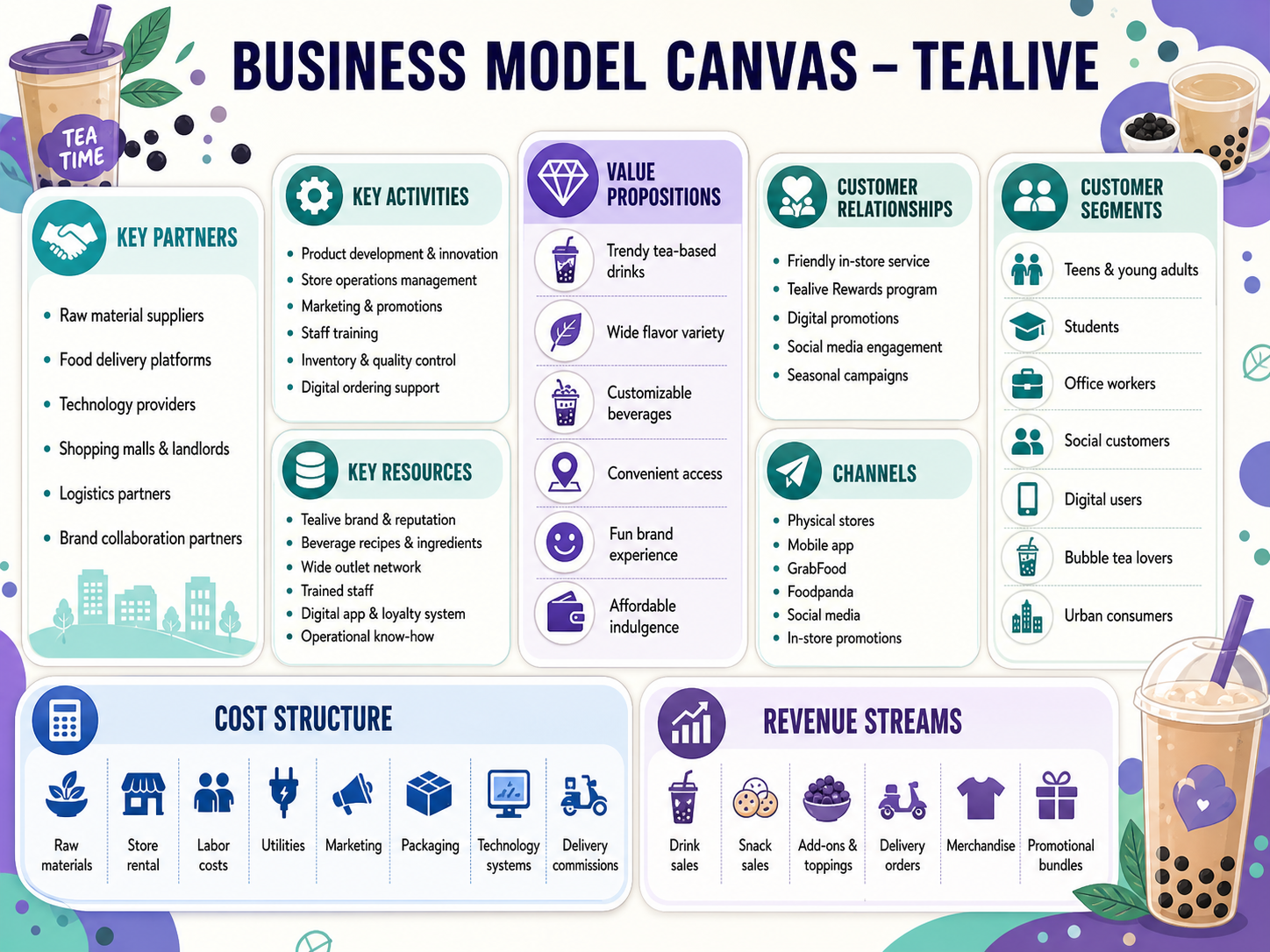
Tealive’s BMC. The 9 Building Blocks of Tealive’s Business Model Canvas

This time, we will discuss the business model analysis of Tealive BMC (Business Model Canvas).  Tealive is a tea-based beverage brand established by Loob Holding Sdn Bhd in 2017. Its founder, Bryan Loo, is an entrepreneur who brought the concept of bubble tea to Malaysia through the Chatime brand. After parting ways with the Chatime franchise, Bryan Loo and his team launched Tealive as a new brand, offering a similar concept but with innovations that better suit the local market’s taste.

Background of Tealive

Tealive quickly gained popularity in Malaysia, offering fresh tea beverages in a variety of flavors with attractive toppings like boba. Their focus is on providing high-quality drinks that can be enjoyed by everyone, anywhere. Tealive also emphasizes a unique customer experience, with attractive store designs and a friendly atmosphere.

In addition to the local market, Tealive has expanded to other countries, including Vietnam, Australia, and the United Kingdom. This demonstrates the success of their strategy in introducing the bubble tea culture to the global market.

Tealive’s mission is to “Bring Joy” through every cup of tea they serve. With more than 500 outlets worldwide, Tealive continues to be one of the most recognized and loved bubble tea brands, especially in Southeast Asia.

The brand’s growth is also driven by product innovation, including the introduction of new flavors and collaborations with other brands, such as KitKat and Hershey’s, offering customers unique beverage variations. Tealive has also explored digital channels through a mobile app and partnerships with food delivery platforms, making their beverages easily accessible to customers everywhere.

Tealive’s BMC: Understanding Each Block

The Business Model Canvas (BMC) is a strategic tool used to describe, design, and analyze business models. It consists of nine key blocks that help understand important aspects of a business. Let’s see how the BMC can be applied to Tealive, a well-known bubble tea brand in Malaysia.

1. Customer Segments

This block identifies the customer groups or markets targeted by the business. It includes understanding who the customers are, their needs, and how they interact with the business.

    • Example for Tealive’s Customer Segments:
      • Teens and Young Adults (13-35 years old): This segment consists of young people looking for stylish and trendy drinks. They are attracted to bubble tea that is not only delicious but also follows the latest trends.
      • Social Customers: These are customers who make Tealive beverages part of their social experience, often visiting with friends.
      • Digital Users: Customers who prefer the convenience of ordering through food delivery apps like GrabFood and Foodpanda.

2. Value Propositions

This covers the unique value or offerings that set the business apart from competitors and give customers a reason to choose its products or services.

    • Tealive’s Value Proposition Examples:
      • Product Innovation: Tealive offers a wide variety of innovative and exciting bubble tea flavors, catering to changing customer tastes.
      • Unique Brand Experience: The attractive store atmosphere and ‘Instagrammable’ beverages make the shopping experience more enjoyable.
      • Convenient Access: Tealive makes it easy for customers to get their drinks through multiple channels, including physical stores and food delivery apps.

3. Channels

Channels refer to the ways the business delivers its products or services to customers. This includes all the touchpoints where customers interact with the brand.

    • Tealive’s Channels:
      • Physical Stores: Tealive has stores in strategic locations such as shopping malls and student areas.
      • Food Delivery Platforms: Partnerships with GrabFood and Foodpanda ensure Tealive drinks are easily accessible to customers anywhere.
      • Social Media Promotions: Tealive is active on platforms like Instagram to promote products and engage with customers.

4. Customer Relationships

This block explains how the business builds and maintains relationships with customers, which can include customer service, loyalty programs, and direct interactions.

    • Tealive’s Customer Relationships:
      • Personal Experience in Stores: Tealive staff provides friendly and professional service, creating a pleasant shopping experience.
      • Tealive Rewards Loyalty Program: Customers can collect points with every purchase and redeem them for gifts or discounts.
      • Social Media Interaction: Tealive regularly engages with customers on social media, holding contests and special promotions.

5. Revenue Streams

This block describes how the business generates revenue from each customer segment. It includes the main and additional revenue sources.

    • Tealive’s Revenue Streams:
      • Sales of Drinks and Snacks: Tealive’s main revenue comes from selling bubble tea and snacks in its physical stores.
      • Revenue from Food Delivery: Tealive generates additional income from orders through food delivery platforms.
      • Sales of Exclusive Products: Tealive also sells products like tumblers and souvenirs, boosting revenue and brand awareness.

6. Key Resources

Key resources in this Tealive’s BMC refer to the assets and resources essential for running the business and delivering its value propositions to customers.

    • Tealive’s Key Resources:
      • Brand and Reputation: A strong brand reputation gives Tealive a competitive advantage in the market.
      • Unique Recipes and Ingredients: High-quality recipes and ingredients are crucial for maintaining the taste and quality of Tealive’s beverages.
      • Store Network: A wide network of stores ensures strong brand presence in multiple locations.
      • Trained Staff: A well-trained team of baristas and store managers is vital for smooth operations.

7. Key Activities

These are the critical actions that a business must take to deliver its value proposition, reach the market, and maintain customer relationships.

    • Tealive’s Key Activities:
      • Product Development and Innovation: Tealive continually introduces new and innovative flavors to attract customers.
      • Store Operations Management: Efficient management to ensure smooth daily operations.
      • Marketing and Promotions: Active and creative marketing activities to increase brand awareness and attract more customers.
      • Employee Training: Continuous training to enhance customer service and operations.

8. Key Partnerships

This block identifies strategic partners that help the business operate and grow. Lets see Tealive’s BMC for key partnerships:

    • Tealive’s Key Partnerships:
      1. Raw Material Suppliers: Tealive works closely with suppliers to ensure high-quality ingredients are always available.
      2. Food Delivery Platforms: Partnerships with GrabFood and Foodpanda help Tealive reach more customers.
      3. Technology Providers: Technology partners assist with managing payment systems and digital applications.

9. Cost Structure

This block describes all the costs that a business must manage to operate and produce its products or services.

    • Tealive’s Cost Structure:
      • Raw Material Costs: Costs for purchasing raw materials like tea, sugar, and boba toppings.
      • Store Rental and Operating Costs: Daily operational costs, including store rent, utilities, and maintenance.
      • Marketing Costs: Expenses for marketing and promotional activities.
      • Labor Costs: Employee salaries and training expenses.

Conclusion

By understanding each block of the Business Model Canvas (BMC) and analyzing relevant examples like Tealive, we can see how a successful business model is built for market success. Tealive integrates various business elements intelligently to meet customer needs and maintain competitiveness. That concludes the example of Tealive’s BMC today. Hope you find this post helpful.

For additional in-depth analysis and a wealth of real-world BMC applications, check out the article “101 Comprehensive Examples of BMC” on Gerbang Bisnes. It revisits the nine Business Model Canvas building blocks—Customer Segments, Value Propositions, Channels, Customer Relationships, Revenue Streams, Key Resources, Key Activities, Key Partnerships, and Cost Structure—then dives into full, real-world canvases for 101 different ventures. This is an excellent resource for anyone looking to see how these strategic frameworks are applied across diverse industries and business types.

Credit: Image by tawatchai07 on Freepik

Nazri Ahmad

Published by
Nazri Ahmad

Recent Posts

Hermes Business Model (BMC #069)

This article analyzes the Hermes Business Model using the Business Model Canvas. It explains how… Read More

May 7, 2026

Canva Business Model (BMC #068)

This article explores the Canva Business Model and provides an in-depth review of each BMC… Read More

May 1, 2026

Selling Burgers, Owning the Land

Many people think they understand McDonald’s business model. Sell burgers. Sell fries. Sell drinks. It… Read More

February 25, 2026

BMC Mixue Analysis (BMC #067)

This BMC Mixue Analysis explains how Mixue built one of the largest beverage networks globally.… Read More

February 5, 2026

BMC Analysis of Loacker Brand (BMC#066 – BMC Loacker)

The BMC Loacker demonstrates how disciplined premium positioning can endure for more than a century… Read More

January 26, 2026

Business Model Canvas Analysis of Pizza Hut (BMC #065)

Pizza Hut is one of the most established global pizza brands. The company was founded… Read More
January 18, 2026