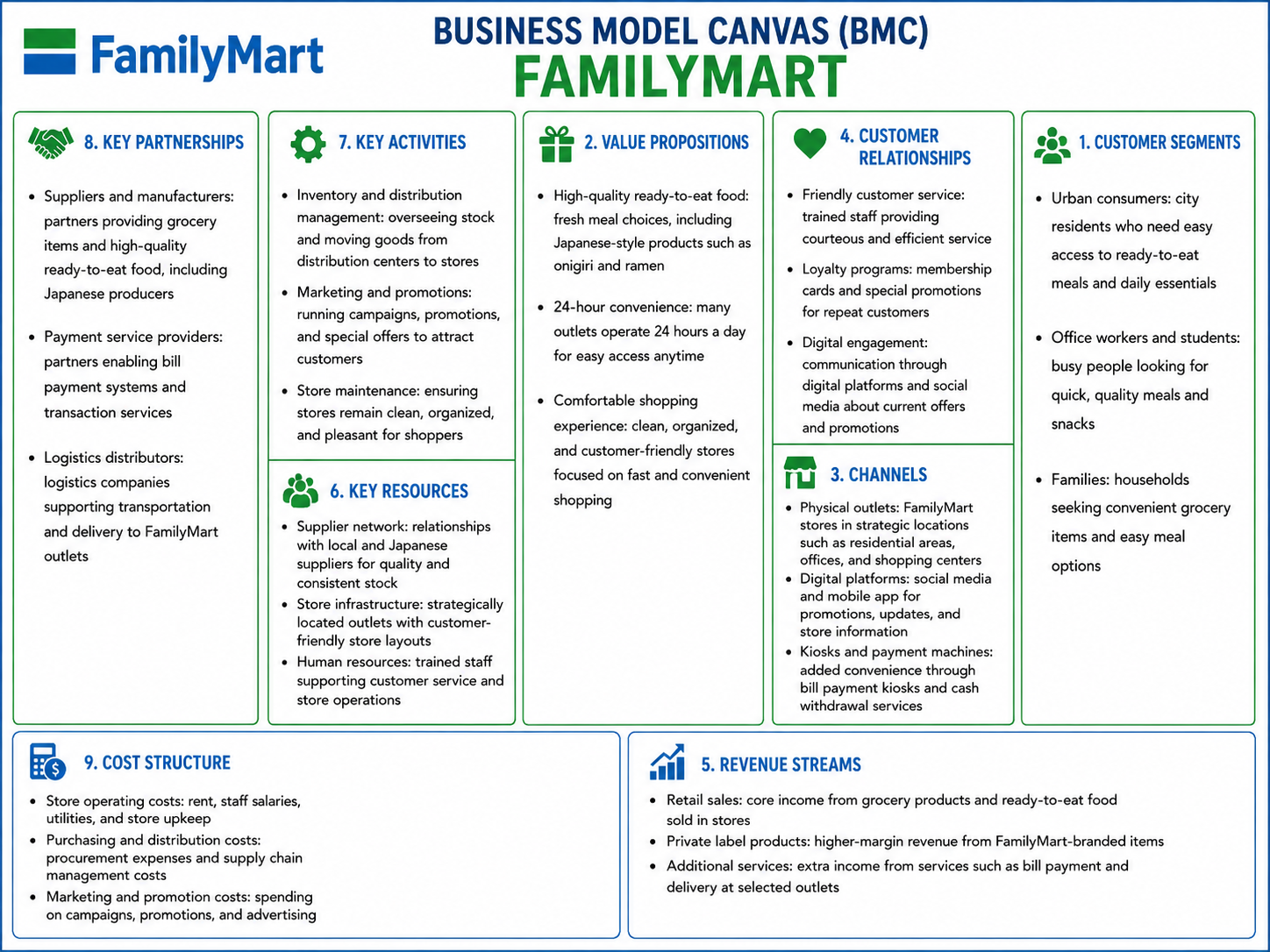
Business Model Canvas (BMC) FamilyMart: Exploring the Japanese Convenience Store Chain’s Strategy in Malaysia
Business Model Canvas (BMC) is a tool used to understand and design business strategies in depth. In this article, we will explore how FamilyMart, a well-known Japanese convenience store chain in Malaysia, operates through the nine BMC blocks and understand the background of the company.
Background of FamilyMart
FamilyMart is a convenience store chain originating from Japan, established in 1981. It is one of the largest 24-hour convenience store chains in Japan, with over 24,000 outlets worldwide. FamilyMart is known for its wide range of ready-to-eat food products, grocery items, and additional services such as bill payment and delivery.
In Malaysia, FamilyMart began operations in 2016 with the opening of its first outlet in Kuala Lumpur. The concept brought by FamilyMart to Malaysia is to offer a fast and convenient shopping experience with a variety of high-quality ready-to-eat foods. FamilyMart has gained popularity among Malaysian consumers with unique Japanese products like onigiri, ramen, and bento, as well as local products adapted to Malaysian tastes.
FamilyMart continues to expand in Malaysia with a strategy to open more outlets in strategic locations such as residential areas, offices, and shopping malls. Their goal is to become the top choice for customers seeking convenience and quality in their daily grocery needs.
1. Customer Segments
Definition: This block refers to the groups of customers targeted by FamilyMart and how the business meets their needs.
Examples for FamilyMart:
- Urban Users: City dwellers who need easy access to ready-to-eat food and daily necessities without having to travel far.
- Office Workers and Students: Busy individuals looking for quick and quality food options for lunch or snacks.
- Families: Families seeking everyday grocery items and easy-to-prepare food.
2. Value Propositions
Definition: This encompasses the unique value FamilyMart offers to different customer segments.
Examples for FamilyMart:
- High-Quality Ready-to-Eat Food: Offering a variety of high-quality, fresh ready-to-eat foods, including special Japanese products like onigiri and ramen.
- 24-Hour Access: Most outlets are open 24 hours a day, providing convenience for customers to shop at any time.
- Comfortable Shopping Experience: Clean, organized, and customer-friendly stores focusing on a fast and easy shopping experience.
3. Channels
Definition: This block refers to how FamilyMart delivers its value to customers and how customers interact with the business.
Examples for FamilyMart:
- Physical Outlets: FamilyMart outlets in strategic locations such as residential areas, offices, and shopping malls providing easy access to customers.
- Digital Platforms: FamilyMart uses digital platforms for promotions, including social media and mobile apps that provide information about promotions and store locations.
- Kiosks and Payment Machines: Additional conveniences such as bill payment kiosks and cash withdrawal machines for customer ease.
4. Customer Relationships
Definition: This block describes how FamilyMart builds and maintains relationships with its customers.
Examples for FamilyMart:
- Friendly Customer Service: Training staff to provide friendly and efficient service at each outlet.
- Loyalty Programs: FamilyMart introduces loyalty cards and special promotions for regular customers who purchase products regularly.
- Digital Support: Through digital platforms and social media, FamilyMart communicates with customers about current offers and promotions.
5. Revenue Streams
Definition: This block identifies how FamilyMart generates revenue from various sources.
Examples for FamilyMart:
- Retail Sales: Primary revenue comes from selling grocery items and ready-to-eat food at their outlets.
- Private Label Products: FamilyMart generates revenue through their own branded products, which are produced and sold with higher profit margins.
- Additional Services: Additional revenue from services such as bill payments and delivery offered at some outlets.
6. Key Resources
Definition: Key Resources refer to the assets and resources needed for FamilyMart to operate and deliver value to customers.
Examples for FamilyMart:
- Supplier Network: Relationships with suppliers of grocery and food products from Japan and locally to ensure a consistent and quality supply.
- Outlet Infrastructure: Outlets located in strategic locations with a customer-friendly store design.
- Human Resources: Trained staff in customer service and store operations management.
7. Key Activities
Definition: Key Activities encompass the critical actions taken by FamilyMart to run their business and meet customer needs.
Examples for FamilyMart:
- Stock and Distribution Management: Overseeing inventory management and distribution of goods from distribution centers to outlets.
- Marketing and Promotion: Implementing marketing campaigns to attract customers to outlets through promotions and special offers.
- Outlet Maintenance: Maintaining cleanliness and organization of outlets to ensure a positive shopping experience.
8. Key Partnerships
Definition: This block describes strategic partners essential for FamilyMart’s operations and development.
Examples for FamilyMart:
- Suppliers and Producers: Partners providing high-quality grocery and ready-to-eat food products, including manufacturers from Japan.
- Payment Service Providers: Partners supporting bill payment systems and transactions at outlets.
- Logistics Distributors: Logistics companies aiding in the transportation and delivery of goods to FamilyMart outlets.
9. Cost Structure
Definition: This block covers all costs required to operate FamilyMart.
Examples for FamilyMart:
- Outlet Operational Costs: Costs related to maintaining outlets, including rent, employee wages, and utilities.
- Purchasing and Distribution Costs: Costs of purchasing goods from suppliers and managing the supply chain.
- Marketing and Promotion Costs: Expenses for marketing campaigns, promotions, and advertising to attract customers.
Conclusion
FamilyMart has built a robust business model in Malaysia by leveraging the strengths of the Japanese convenience store network and adapting to local needs. Through Business Model Canvas (BMC) analysis, we can understand how FamilyMart operates, interacts with customers, and generates revenue. These nine BMC blocks provide a comprehensive view of the business strategy that helps FamilyMart remain a top choice for grocery and ready-to-eat food purchases in Malaysia.
Image Credit: Image by rawpixel.com on Freepik